DomainFX helps Australian service brands turn suburb coverage into pages that people actually use and search engines like Google can confidently rank. A well planned service area page reduces confusion, improves local search performance, and supports better local customer enquiries. A sloppy rollout creates duplicate content, messy tracking, and weak local relevance in competitive suburbs. If you are building pages for local growth, start by fixing your structure first, then expand. Speak with DomainFX to map your service areas and build a clean rollout plan.
What a service area page does for local SEO and visibility
A service area page should explain where you work and what you do, in language a local business customer recognises. It supports local SEO by matching suburb level queries with clear service information and real location details.
For service area businesses, the goal is clarity. You state the service boundary, you list the suburbs you serve, and you explain what changes by area, such as call out fees, response windows, or compliance differences. That single page can improve visibility in local search results when it is connected to the right supporting pages.
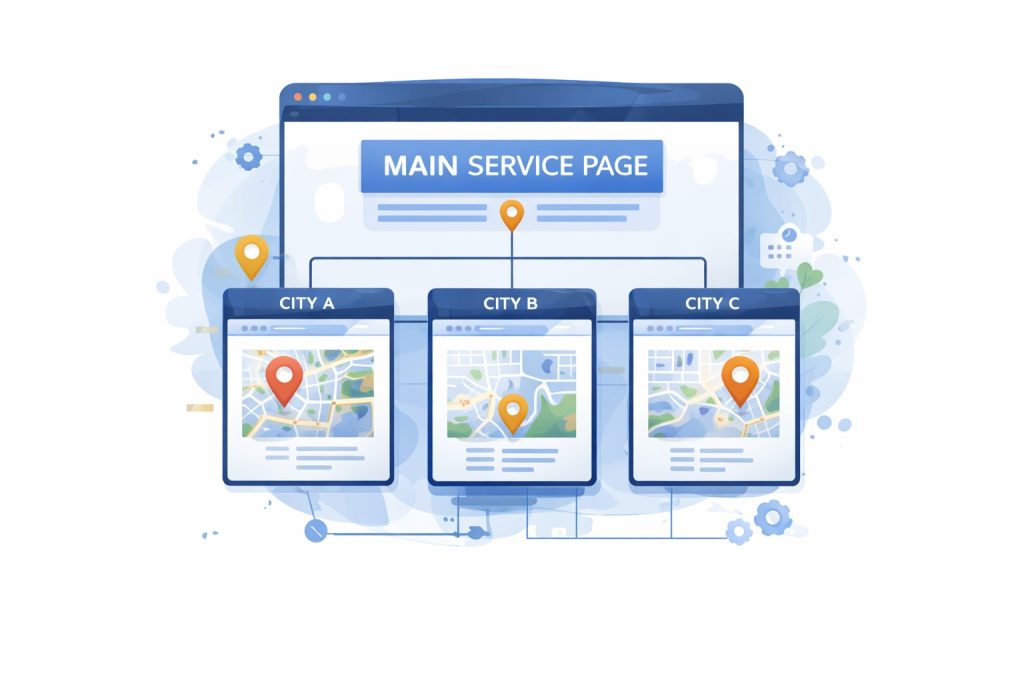
A service area page is not a catch all landing page. It works best when it sits beside a main service page that explains the core offer, pricing approach, and standards. Then each suburb page can focus on relevance and proof without rewriting the entire service every time.
Quick checklist for a strong service area page
- Define the service area in plain terms and mention nearby landmarks only if they are real.
- Add one sentence on who the local service is for and what problems you solve.
- Include a short list of suburbs you cover, and keep it consistent across locations.
- Use one local keyword where it fits naturally and avoid stuffing.
- Add internal links to the matching service page and a page for each location you actively market.
Location page structure for businesses with multiple locations
A location page should exist when there is a genuine physical location, office location, or staffed presence that changes trust and service delivery. For businesses with multiple locations, a consistent template improves quality control and makes local search easier to support.
Think in page types, not page count. You need one main service page, then dedicated pages that either represent a real office or a service area, and finally supporting content that answers local questions. This approach keeps pages are one cohesive system, not a pile of disconnected URLs.
A location-specific page works best when it has unique signals that match the suburb. That includes a clear location name, contact info, service availability, and proof that relates to that area. If you only serve the area and do not have a storefront, make that clear and avoid implying a physical location.
Recommended location page sections
| Section | What to include | Why it matters |
|---|---|---|
| Opening summary | Service, suburb, who it helps | Helps search engines understand relevance |
| Service detail | What is included and excluded | Improves conversion from local search |
| Proof | Reviews, jobs, project types by area | Builds strong local trust |
| Practical info | Parking, service hours, response range | Supports real user needs |
| Internal links | Link to the service page and related guides | Supports search engine optimization |
Creating location pages for service area coverage across multiple cities
Creating location pages works when each page answers a slightly different question that a person in that suburb would ask. It is the difference between a thin location landing pages rollout and a set of individual location pages that actually earn clicks.
If you operate across multiple locations, do not treat “pages for each city” as the strategy. Treat it as an outcome of a clear architecture. Start with the main service, then build pages for each service line you offer, then add a service page for each city only when the city is a meaningful market with enough demand and distinct context.
For brands that serve multiple cities, keep your template stable and vary the substance. Add suburb specific constraints, common property types, typical job sizes, or access notes where true. Use local keywords naturally and only incorporate local keywords when they match real on the ground delivery.
Decision criteria for when to create a separate page
- The area has distinct demand or a different service mix.
- You can add proof, photos, or examples tied to that suburb.
- You can describe different locations you travel from or typical arrival times.
- You can support it with internal links and ongoing updates.

On page SEO best practices for an area page that earns search results
An area page should be easy to scan and precise enough that a search engine can map it to a suburb query. Seo best practices start with strong headings, clear copy, and a clean structure that reduces ambiguity.
Use one primary keyword theme per page and keep it consistent in the title, H1, and first paragraph. Then add secondary phrases where they make sense, such as service area, location page, and local search, without repeating them every sentence. This is best practice because it improves readability and reduces duplication.
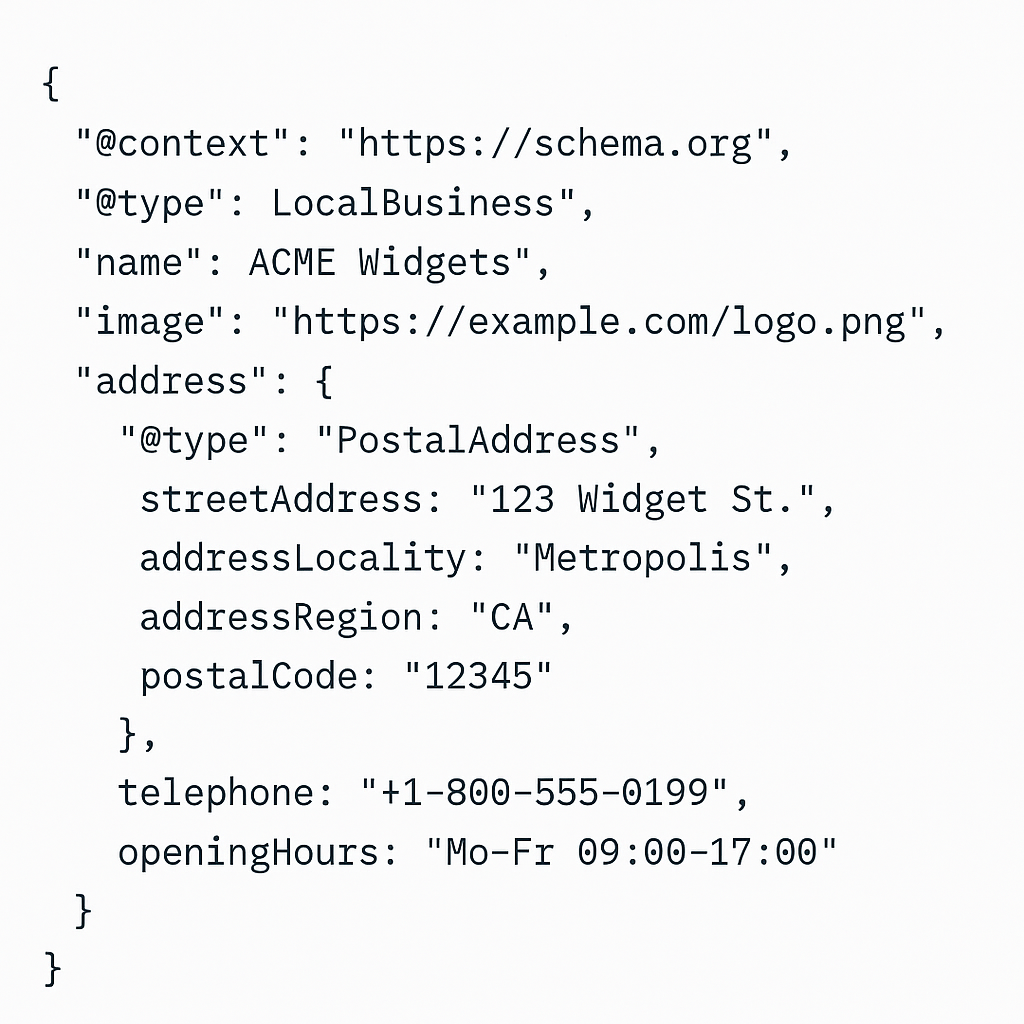
Include the basics that help search engines, such as structured NAP details where appropriate, and schema markup if your site can support it. Add service boundaries, suburb lists, and a short “what we do here” section that is genuinely different across locations. This supports better search results and can improve search rankings over time.
On page elements to prioritise
- Title and H1 include the suburb and the service, written for humans first.
- Opening paragraph explains the offer and the suburb in two clear sentences.
- One proof block with reviews or outcomes relevant to that area.
- A short FAQ on local concerns, such as access, compliance, or scheduling.
- A clear call to action that suits a home service enquiry.
Internal links and site layout that build local and search visibility
A clean internal linking structure makes your multi suburb setup easier to crawl and easier to maintain. It also creates clearer topical clusters for local SEO strategies to work.
Start with the main service page as the hub. Link out to each suburb location-specific page and back again so the relationship is obvious. Add links between nearby suburbs only when it helps users, such as “also serving” links across locations that match your actual service runs.
This approach boosts local search by concentrating authority rather than scattering it. It also improves search visibility because the site communicates hierarchy and context, which helps search engines understand how the pages relate.
Simple internal link model
- Main service page links to key service area page and priority suburbs.
- Each suburb page links back to the main service page and one relevant guide.
- One service area page links to grouped suburbs and key FAQs.
- Blog posts link to the most relevant suburb page, not every suburb.
Google business profile and local citations that support local SEO efforts
Google Business Profile is still a primary driver of discovery for Google’s local pack. Your website pages and your listing need to agree on names, categories, and service coverage so your visibility in local search results does not suffer.
If you have multiple business locations, each listing should map to the right location page. If you are a service area business without a shopfront, make sure your listing settings reflect that and avoid address confusion. This is where local citations help, because consistent mentions across directories reinforce trust and local relevance.
Choose citations that match your industry and region, including the local chamber of commerce if it is appropriate. Aim for accuracy, not volume. Over time, this supports building local authority and reinforces better local outcomes.
Local authority signals to prioritise
- One Google Business Profile per real location, linked to the right page.
- Consistent NAP across key directories as local citations.
- A small set of local backlinks from partners, suppliers, or community groups.
- Reviews that mention suburb names naturally, without prompting or scripting.

Using Google Search Console and search console to monitor Google search
Google Search Console is the simplest way to see whether your location pages are being discovered, indexed, and clicked. It also shows how your search results change by query and by page.
Set up tracking early. Watch impressions and clicks for each suburb page, then compare it against your main service page so you can spot cannibalisation. Use the performance report to identify local keyword gaps and refine your headings and copy.
When you monitor search visibility, you also learn which suburbs need more proof, stronger internal links, or better alignment with Google Business Profile. This is where you can see visibility in local results improving as you tighten relevance and reduce duplication.
What to check monthly
- Indexing status for new suburb pages.
- Queries driving local search results to each page.
- Pages that compete for the same term and need differentiation.
- Internal links to new pages so discovery is consistent.
Scaling a multiple location footprint with seo strategies that avoid thin pages
Scaling across multiple suburbs is where most sites break. The fix is to treat expansion as a multi-location seo strategy, not a publishing sprint.
For a multiple location rollout, define tiers. Tier one suburbs get full pages with unique proof and detailed location details. Tier two suburbs can be grouped under a service area page until you have enough substance to justify a dedicated page. This keeps content across multiple locations useful instead of repetitive.
Use seo strategies that protect quality. Build a repeatable template, then make sure each page includes a unique section that reflects that suburb. Add content for multiple suburbs only when it is genuinely shared, like licensing notes, common property types, or seasonal demand. This approach supports local SEO without bloating your site.
Common pitfalls to avoid
- Copying the same paragraphs and only swapping the suburb name.
- Claiming a physical location where you do not have one.
- Publishing too many pages before you can maintain them.
- Forgetting to connect pages through internal links and proof.
When this may not be the right fit for your local business
A service area page and location page rollout is not always the fastest path to growth. If you do not have enough demand in a suburb, or you cannot add unique proof, your pages may underperform and waste crawl budget.
It is also a poor fit when your services change week to week and you cannot describe them consistently. In that case, strengthen your core service page, improve your Google Business Profile, and build supporting content first. Then expand when you can sustain quality.
If you only serve a very small radius, a single strong area page plus a few supporting posts may be better than dozens of suburb pages. Better local outcomes come from clarity and proof, not page count.
How to judge if you need this now or later for optimising local SEO
Optimizing local seo with suburb pages makes sense when you can maintain them and when the business model supports it. If you serve multiple locations and want steady growth, the earlier you get the structure right, the easier it is to expand later.
Do it now if you see consistent suburb based queries in your leads, you have clear service boundaries, and you can add suburb specific proof. Do it later if you are still changing your offer, you do not have consistent reviews yet, or you need to fix technical issues first.
A practical rule is to start with a service area page plus the top five to ten suburbs that already generate enquiries. Then expand as you gain proof and refine the template.
Where this connects to your multi location seo strategy and next steps
Your location pages should connect to a broader plan that includes technical foundations, content, and authority. That is how you serve multiple markets without spreading quality too thin.
A sensible next step is a short audit of your current structure, your Google Business Profile setup, and how your pages map to real delivery. From there, you can build a rollout plan that prioritises the suburbs with the best opportunity and the least duplication risk.
If you want DomainFX to help, start with a page inventory and a template build. Then we can align service pages, suburb pages, and supporting content so the site performs across locations and supports long term growth.
FAQs
How many suburb pages should I publish at once?
Start with the suburbs that already drive enquiries and where you can add unique proof. Publishing a smaller set of high quality pages usually outperforms a large batch of thin pages. Expand in stages, and keep every page connected to the main service page through internal links.
Should each suburb page link to the same call to action?
Keep the call to action consistent, but tailor the supporting copy to the suburb. People want to know you can get to their area and solve their problem. A clear phone and form option works well, especially for home service enquiries from mobile local search.
What is the difference between a service area page and a location page?
A service area page describes where you travel and how you deliver service without implying a staffed address. A location page supports a real office or physical location and can include stronger local proof like signage, on site photos, or walk in details. Both can support local SEO when they are honest and useful.
Will suburb pages hurt my rankings if they are similar?
They can, if the pages are near duplicates and compete for the same terms. Avoid copying blocks of text and only changing the suburb name. Add unique sections, unique proof, and clear internal linking so each page has a purpose in the overall structure.
Do I need a blog if I already have suburb pages?
A blog helps you answer questions that do not belong on every suburb page. It also supports seo strategies by creating supporting content that can link to the right suburb pages and service pages. This helps build relevance and authority without repeating the same paragraphs across locations.
Ready to improve local SEO across your suburbs? Contact DomainFX to plan your service area page structure, build a location page template, and roll out pages that perform in local search.